Negative balance on a merchant account: why it happens and how it is made good
Why a merchant account balance can go negative after a chargeback, what a negative balance blocks, how it is made good, and how to avoid one.
On this page
A negative balance on a merchant account means you owe the payment provider money: more has been taken out of your balance than was in it. It almost always comes from a chargeback that arrives after the money it concerns has already been paid out. A chargeback cannot be refused or postponed — the buyer's bank has already taken the funds back — so the provider records the debt as a negative available balance and recovers it from your next payments.
This guide explains how a merchant account balance goes negative on KukoPay, what a negative balance blocks and what it does not, how it is made good, and how to keep it from happening.
How a merchant balance goes negative
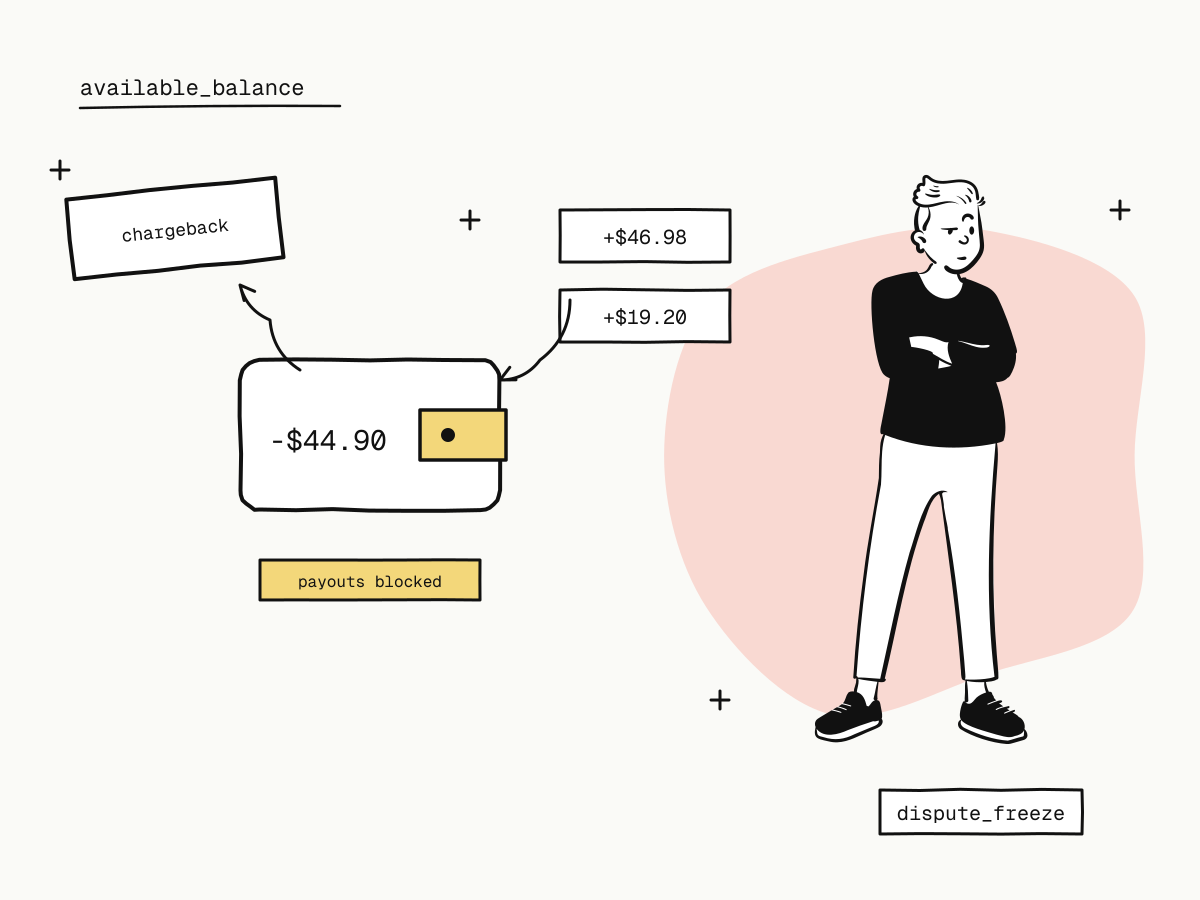
When a buyer files a chargeback, the disputed amount moves from your available balance to frozen at once (dispute_freeze). Unlike a refund, that move is never refused for insufficient funds: the money has already left upstream, so the ledger records it whether or not your balance can cover it.
A worked example:
Paid out yesterday                         available     $0.00
Chargeback opened on a $29.90 order        available   −$29.90   frozen $29.90
Dispute lost: amount debited + $15.00 fee  available   −$44.90   frozen  $0.00
The same happens on a smaller scale whenever the available balance is lower than a disputed amount — for example after a large payout. A lost dispute adds the chargeback fee on top. See the chargeback guide for how disputes move money.
What a negative balance blocks
- Payouts. No payout can be requested while the available balance is negative;
withdrawable_balanceis what you can actually take out, and it is zero. - Refunds that the balance cannot cover. A refund needs enough available balance in the order's currency — see partial refunds explained.
What keeps working
- Taking payments. Checkout, orders and payment links carry on as normal.
- Answering disputes. Submit evidence before the deadline; a won dispute returns the frozen amount to your available balance (
dispute_unfreeze). - Your integration. Nothing in the API changes; the balance endpoint simply reports a negative
available_balance.
How a negative balance is made good
From your next payments. Each new payment's net amount is credited to the available balance as usual, and the negative figure shrinks until it is back above zero; after that, payouts are possible again. Nothing needs to be requested.
Two things follow from how balances are kept:
- Per currency. A negative USD balance is made good by USD payments. HKD or CNY balances do not cover it, because nothing is converted automatically.
- A won dispute is the fastest fix. If the chargeback was unjustified, winning it returns the frozen amount in one step — which is why it pays to answer every dispute you can win.
How to read a negative balance
Use the balance and the ledger together:
GET /v1/balance?currency=USDgivesavailable_balance,frozen_balanceandwithdrawable_balanceright now.GET /v1/balance_transactionslists every movement —dispute_freeze,dispute_debit,dispute_fee,payout_freeze— so you can see exactly which dispute took the balance below zero. See payment reconciliation.
How to avoid a negative balance
- Do not pay out to zero. Leave a buffer in each currency roughly the size of the disputes you could receive, especially after a sales spike.
- Refund before it becomes a chargeback. A refund is refused rather than taken into the negative, and it avoids the fee — see refund policy for online stores.
- Prevent unrecognised-charge disputes with a clear name, receipts and reachable support — see friendly fraud.
- Keep your chargeback rate low. At 0.9% with 3 or more disputes over a rolling 30 days, payouts are suspended for review regardless of your balance.
Testing it in the sandbox
The sandbox wallet starts with $5,000.00 of test funds. If you push it negative while testing disputes, use Top up test funds on the wallet page to bring it back to 5,000.00 — see sandbox vs live mode.
Summary
- A negative merchant account balance means you owe the provider — usually because a chargeback arrived after the money was paid out;
- on KukoPay a dispute freeze is never refused for insufficient funds, and a lost dispute adds a $15.00 fee by default;
- a negative balance blocks payouts and refunds it cannot cover, but payments and dispute responses carry on;
- it is made good by your next payments in the same currency, or at once by winning the dispute;
- avoid it by keeping a buffer, refunding early and keeping your chargeback rate low.
Try it in the sandbox
Create a merchant account and request a test key. The sandbox needs no business verification.